In today’s digital age, our interaction with technology, especially artificial intelligence (AI), has become increasingly sophisticated. As AI systems advance, so does the necessity for effective communication. To enhance this interaction, it’s vital to understand the basic structure and components of AI communication, much like learning the essentials of a tool like Excel, Word, or even Google. I developed the easy to learn The POWERD Prompt Method – a structured approach to AI communication. We have covered general AI and LLM understanding and started reviewing POWERD – P is for PERSONA. You can check out the blog series to get all the details. Today, we jump into the ‘O’ in POWERD, which stands for “Output.”
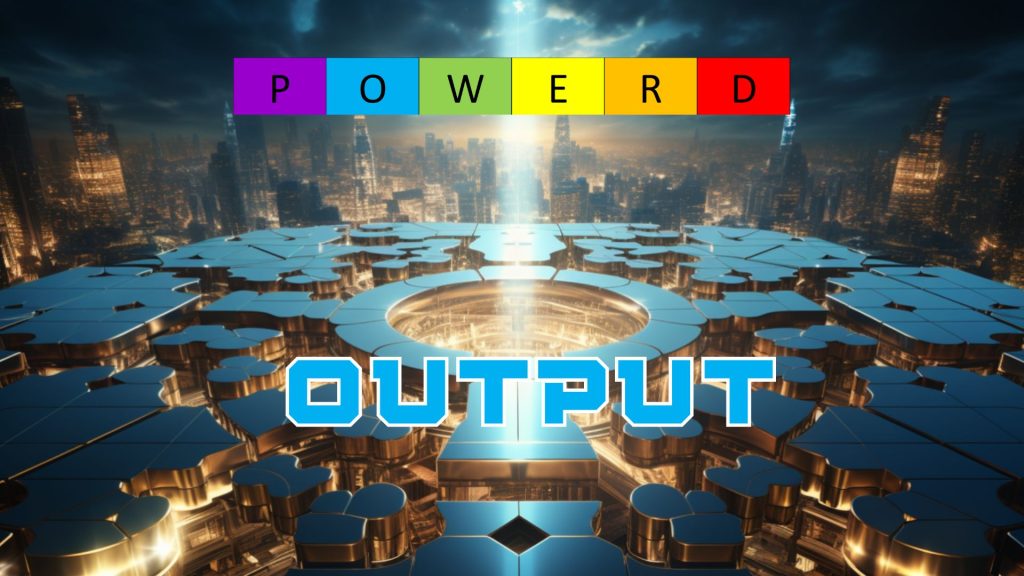
Output, though seemingly straightforward, is often the phase where many users inadvertently confuse the AI. It’s essential to grasp that at this juncture, the key is simplicity. Order of your prompt helps with CONTEXT, and that is important to setting the stage! Just as we wouldn’t bombard a budding writer with complex literary techniques when we are just looking for an outline, we shouldn’t overburden the AI with intricate details prematurely either. This early stage is about laying out a general idea – be it a blog post, a lesson plan, Facebook ad copy, and so on. By doing this, we’re essentially shining a light on the puzzle pieces, making the picture clearer.
A common misstep is adding excessive constraints or specifications too early in the Output phase. While it might seem counterintuitive, this approach can often lead to muddled responses from the AI. Instead, the goal here is to give the AI a sense of the general format you’re aiming for, while still allowing it the space to innovate and generate. As we progress in the POWERD method, there will be opportunities, specifically in the “R” phase, to narrow down and refine the output further. But for now, the focus is purely on setting the broad strokes.
Advanced AI models are continually evolving, increasing their understanding of various output types. As users, we can leverage this advancement by interacting more dynamically with the AI. For instance, if you’re unsure about the exact output format you want or the one you chose did not quite do the trick, why not turn the tables and ask the AI? Pose questions like, “What OUTPUT would you use that’s similar to a blog? Give me 10 ideas and explain how they differ.” Such interactions not only provide clarity but also foster a collaborative approach, ensuring you get the most out of your AI tool.
There’s a beautiful synergy between the ‘Persona’ and ‘Output’ phases in the POWERD method. After establishing the Persona, which dictates how the AI should act or respond, the Output phase offers a complementary layer, guiding the AI on the format or structure of its response. This dual approach sets the CONTEXT, enhancing PATTERN RECOGNITION, and ensuring more focused and relevant outputs.
As we navigate the vast landscape of AI communication, it’s crucial to remember the importance of setting clear, uncomplicated outputs. The POWERD method, with its emphasis on ‘Output,’ offers a roadmap to achieving this. By understanding and effectively utilizing this phase, we can foster more streamlined, efficient, and meaningful interactions with AI. The future of AI communication is bright, and with tools like the POWERD method at our disposal, we’re well-equipped to harness its full potential.
Tomorrow we jump into possible my favorite module of the POWERD method…WHO! Telling the AI WHO the audience is for the OUTPUT!